Chapter 2 · The Limestone Cage
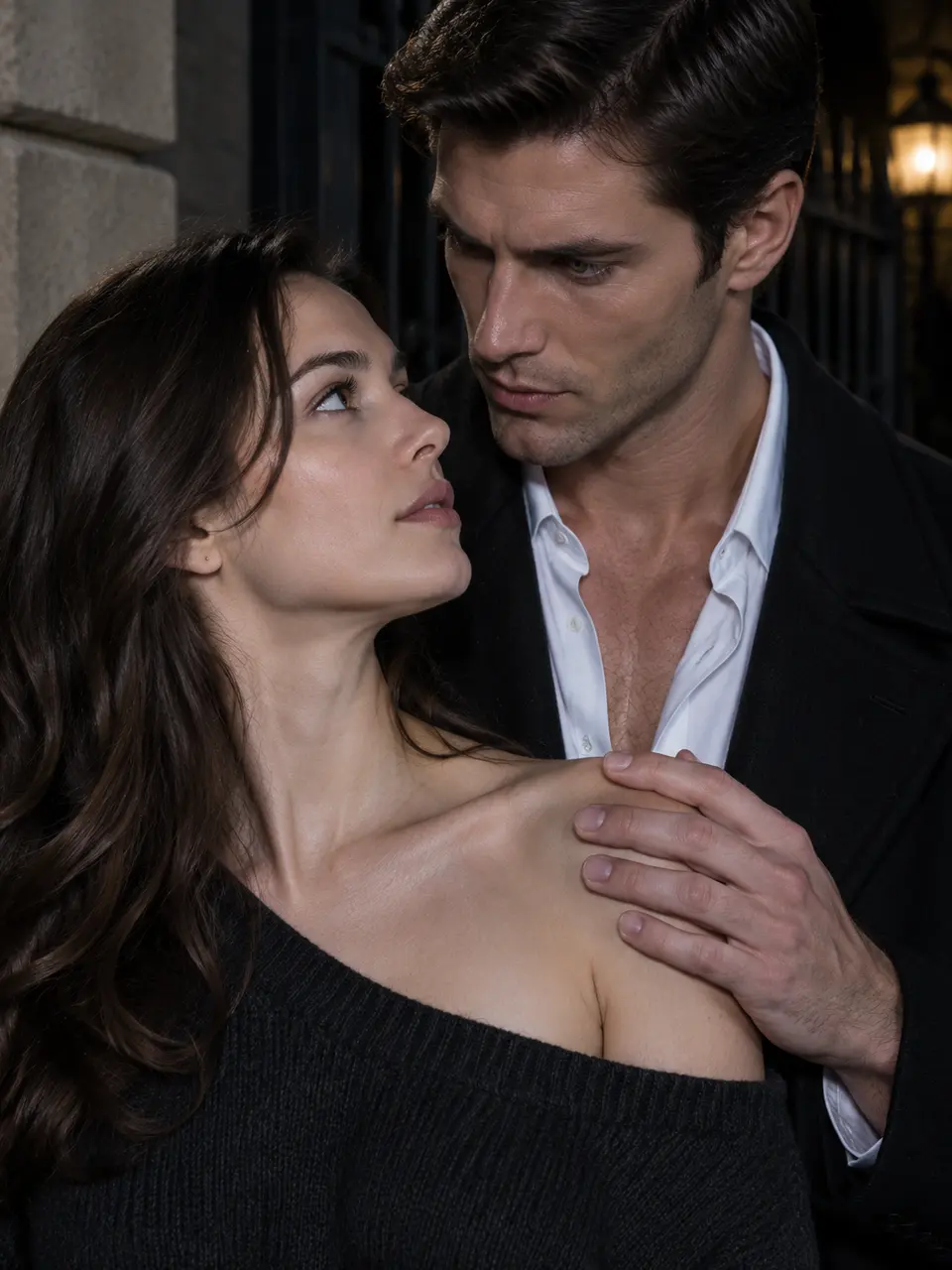
He didn't let go of my wrist until the gate closed behind the car, and even then it felt like a decision, not an accident.
"Cinder Point," Dominic said, like that was supposed to mean something to me besides the end of the road.
The headlights swept over wrought iron twelve feet high, spikes at the top like somebody designed it to keep things out or keep things in, didn't matter which. Limestone walls rose past the trees, pale as bone in the dark. One road in. I'd clocked that from the back seat, the way you clock an exit in a burning building, except there wasn't one.
"You're not going to chain me to a radiator," I said. Not a question.
"No." He got out, came around, opened my door like we were on a date. "I'm going to give you a room with a bed and three meals and ninety days to find your brother. You'll wish I'd chained you to a radiator by week two."
Two men at the door nodded at him and looked through me like I was furniture being delivered. That told me more than anything he'd said at the pier. I wasn't a guest. I was inventory.
Inside, the house smelled like lemon oil and cold stone, the kind of clean that costs money. Marble floor, a staircase that curved up into dark, a chandelier somebody dusted every day of their life. I catalogued it the way I catalogue everything — doors, windows, the distance between me and each one — and he watched me do it with something close to amusement.
"Front door's got a keypad," he said. "Four guards rotate the grounds. The water's forty degrees and the current pulls east. You want to swim for it, I won't stop you, but I'll have a boat pick you up before you're numb to the elbows."
"You've thought about this."
"I've done this before."
I didn't ask what that meant. I didn't want to know yet.
A woman came down the stairs, dark hair, sharp eyes, somewhere around my age. She looked at me the way you look at a stray that wandered onto the porch — curious, not unkind, careful not to get bitten.
"This is Gia," Dominic said. "My cousin. She'll show you the room."
"The room," I repeated. Singular. Like there was only ever going to be the one.
Gia's mouth twitched, almost a smile. "Second floor. Come on."
I followed her up because what else was I going to do, sprint for a door with a keypad I didn't know the code to? The staircase turned twice. I counted the doors in the upstairs hall — six — and filed that away too, along with the fact that every single one of them had a lock on the outside, not the inside.
My room had a four-poster bed, a window seat, and a view of black water stretching out to nothing. I went straight for the window and shoved. It gave half an inch and stopped dead, the kind of stop that means bolted, not stuck.
"Security glass," Gia said from the doorway. "Don't bother. I tried it myself once."
"You tried it."
"Long story." She leaned on the frame, arms crossed. "Bathroom's through there. Towels in the closet. Dinner's at eight if you want it, and nobody's going to make you eat if you don't."
She left. I heard the lock turn from the outside, soft, almost polite, like it was embarrassed to be doing its job.
I gave myself sixty seconds to want to scream and then I got up and started working the room the way I'd work a set of books that didn't balance — methodically, looking for the thing that didn't fit.
The closet was empty except for a shelf of spare linens. The dresser had nothing in the drawers but a liner of yellowed paper. I almost missed it, running my hand along the back panel out of habit, the way you check for a hidden drawer because your dad taught you people hide things in furniture before they hide them anywhere else.
My fingers caught on something. A seam, raised, where the panel had been pried and glued back wrong.
I worked a nail under the edge and the panel came loose with a crack that sounded like a gunshot in the quiet. Behind it: a shoebox, cardboard gone soft with damp, and inside that, papers. Old ones. Receipts, a few photographs curled at the corners, a page torn from a desk calendar.
And handwriting I would have known in my sleep, in a coma, in the dark. Tight loops, a backward slant on the Ys, the way he crossed his sevens with a little flag because an accountant taught him that in night school and he never dropped the habit.
My father's handwriting.
My hands went cold before my brain caught up with why.
Dad had been dead twelve years. He'd never set foot in this house — I'd have bet my life on that, except apparently my life wasn't mine to bet anymore.
I smoothed the torn calendar page flat on my knee. A date, circled hard enough to tear the paper, and under it four words scrawled so fast the pen had skipped:
*Tell her before Friday.*
I knew that date. I'd know it anywhere. It was six days before the crash that killed him.
The lock on my door clicked.
I shoved the box back into the wall just as the handle turned, heart going so hard I could feel it in my teeth, and Dominic Castellane filled the doorway like he owned the air in the room — which, I was starting to understand, he did.
"Dinner," he said, and then his eyes dropped to my hands, to the paper I hadn't quite hidden fast enough, and something behind his face shut like a door closing on a draft.
"What's that," he said. It wasn't really a question. It was the sound of a man who already knew the answer and hated it.